
The Myth of the "Magic Mic"
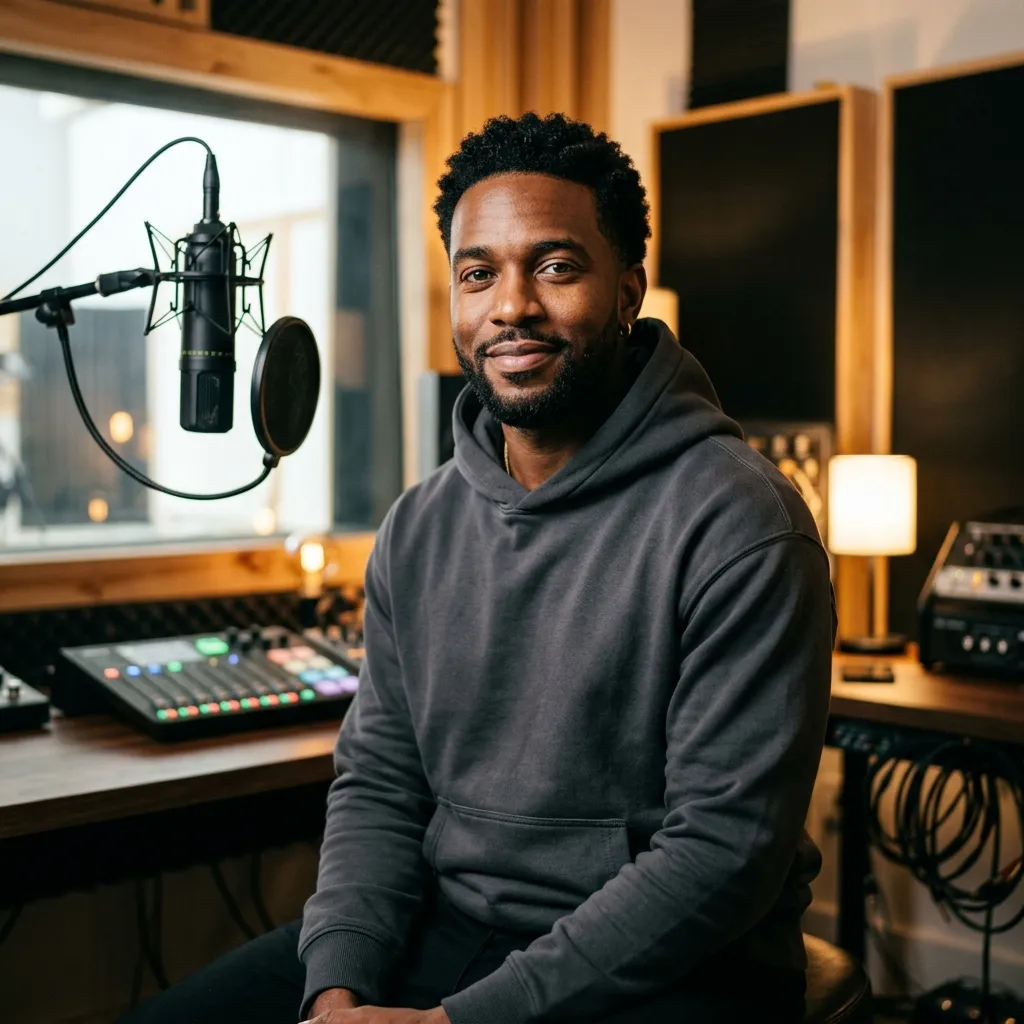
When I engineered a session for a prominent Chicago drill artist last month, he walked into the studio carrying a beat-up, $100 dynamic microphone wrapped in a t-shirt. He refused to use the $3,600 Neumann U87 we had set up in the vocal booth. "This mic is too sensitive," he explained. "It catches all my breaths and background noise. My $100 mic sounds grittier. It fits the beat." He recorded the entire track sitting on the control room couch, holding the microphone in his hand. The song has 12 million streams.
There is a pervasive myth in the hip-hop community that spending $3,000 on a microphone will magically make your voice sound like Drake or Kendrick Lamar. It will not. In fact, if you plug a $3,000 condenser microphone into a cheap audio interface in an untreated, echoey bedroom, it will actually sound worse than a $100 dynamic microphone.
In 2026, the technology behind audio recording has peaked. You do not need to spend thousands to get radio-ready quality. However, you do need to understand the acoustic environment you are recording in. This comprehensive guide breaks down the science of vocal recording, the difference between dynamic and condenser mics, and the absolute best rap recording microphones at every budget level to capture the best rap vocals.
Quick Comparison: Top Microphones for Rap in 2026
If you want the immediate recommendations for the best microphone for rapping without reading the full breakdown, here is the executive summary:
| Microphone Model | Price | Mic Type | Best Room Type | The Verdict |
| :--- | :--- | :--- | :--- | :--- |
| Shure SM7B | ~$399 | Dynamic | Untreated / Bedrooms | The undisputed industry standard for home rap recording. |
| Shure SM58 | ~$99 | Dynamic | Highly Echoey / Live | The budget workhorse that rejects almost all background noise. |
| Rode NT1 (5th Gen) | ~$250 | Condenser | Partially Treated | The absolute best value for crystal-clear, modern trap vocals. |
| Neumann TLM 103 | ~$1,200 | Condenser | Professionally Treated | The high-end compromise for that expensive, silky radio sound. |
!Dynamic vs Condenser Microphone Comparison
Understanding the Two Types of Microphones
Before you spend a single dollar, you must understand the fundamental difference between the two primary types of microphones used in hip-hop. Choosing the wrong type for your room is the most common mistake independent artists make.
Condenser Microphones
Condenser microphones are the gold standard for professional, commercial recording studios. * How They Sound: They are incredibly sensitive. They capture the highest highs, the deepest lows, and the subtle nuances and "air" of a vocal performance. The Catch: Because they are so sensitive, they capture everything*. If your computer fan turns on, or a car drives by your window, a condenser microphone will record it. * The Verdict: You should only use a condenser microphone if your room is acoustically treated (soundproofed with acoustic panels) or if you are using a dedicated vocal isolation booth.Dynamic Microphones
Dynamic microphones are the workhorses of the music industry. They are traditionally used for live stage performances, radio broadcasting, and podcasting. * How They Sound: They are less sensitive and have a more "focused" pickup pattern. They capture a warm, punchy sound that pushes the vocal directly to the front of the mix. * The Catch: They require significantly more "gain" (volume power) from your audio interface to get a loud enough signal. You often need to buy a secondary device (like a Cloudlifter) to boost the signal cleanly. * The Verdict: If you are recording in an untreated bedroom, a closet, or a living room with hard wood floors, a dynamic microphone is your best option. It will naturally reject the room echo and focus only on your voice.Step 1: The Best Microphones for Untreated Home Studios
If you are like 90% of independent artists in 2026 and are recording in your bedroom, you should focus almost exclusively on dynamic microphones.
1. The Industry Standard: Shure SM7B
!The Shure SM7B Dynamic Microphone
* Price: ~$399
Why It Wins: The Shure SM7B is arguably the most important microphone in modern hip-hop. It was famously used by Michael Jackson to record Thriller*, and today, it is the go-to microphone for artists who record at home or in hotel rooms on tour. It has a built-in shock mount and internal pop filter, and it excels at rejecting background noise. It delivers a dark, warm, "radio-ready" sound that smooths out harsh, aggressive rap vocals perfectly.
* The Drawback: It requires an immense amount of gain. If you have a cheap audio interface, the recording will be too quiet, and turning up the volume will introduce an annoying "hiss." You must pair this microphone with a high-quality interface or an inline preamp.
2. The Budget Legend: Shure SM58
!The Shure SM58 Dynamic Microphone
* Price: ~$99
* Why It Wins: This is the microphone you see every rapper holding on stage. It is nearly indestructible (you can literally drop it on concrete, and it will still work). For $99, it offers incredible noise rejection. If you have absolutely zero acoustic treatment and a loud roommate, holding an SM58 and rapping directly into it is the best way to get a clean, usable recording on a tight budget.
Step 2: The Best Microphones for Treated Studios
If you have invested the money to properly treat your room with acoustic panels and bass traps, you can finally unlock the crystal-clear detail of a condenser microphone.
3. The Ultimate Value: Rode NT1 (5th Generation)
!The Rode NT1 5th Generation Condenser Microphone
* Price: ~$250
* Why It Wins: The Rode NT1 has been the entry-level king for a decade, but the 2026 (5th Gen) iteration is a masterpiece of engineering. It boasts one of the lowest "self-noise" ratings in the world, meaning the microphone itself produces virtually zero electronic hiss. It captures a very flat, transparent, and bright vocal that cuts through heavy 808s and complex trap beats with ease. It often comes as a bundle with a high-quality shock mount and pop filter, making it the best value package on the market.
4. The High-End Workhorse: Neumann TLM 103
!The Neumann TLM 103 Condenser Microphone
* Price: ~$1,200
* Why It Wins: If you want the legendary, expensive "Neumann Sound" without paying $3,000, the TLM 103 is the industry compromise. It is a large-diaphragm condenser that captures vocals with immense presence and clarity. Many top-tier engineers prefer it for modern, melodic hip-hop (think Travis Scott or Gunna) because the high frequencies sound incredibly smooth and require very little equalization during the mixing process.
5. The Holy Grail: Neumann U87 Ai
!The Neumann U87 Ai Condenser Microphone
* Price: ~$3,600
* Why It Wins: Walk into any multi-million dollar studio in Atlanta, Los Angeles, or London, and you will see a Neumann U87 in the vocal booth. It is the gold standard for a reason. It captures vocals with a weight, depth, and three-dimensional realism that cannot be faked with plugins. If you are operating a commercial studio and recording clients, having a U87 is a prerequisite to being taken seriously.
Best Practices for Recording Rap Vocals
Buying the microphone is only step one. How you use it dictates the final quality of the song.
Always Use a Pop Filter
A pop filter is the circular mesh or metal screen placed between your mouth and the microphone. It serves one critical purpose: stopping plosives. Plosives are the massive bursts of air that leave your mouth when you rap words starting with "P," "B," or "T." If that burst of air hits the microphone capsule directly, it causes a massive, distorted low-frequency boom that cannot be removed in the mixing process. A $20 pop filter will save a $3,000 recording.Control Your Proximity Effect
The "proximity effect" is a phenomenon where the closer you get to a directional microphone, the more bass (low-end) it records. * If your voice sounds too thin and weak, step closer to the microphone (about 2 to 3 inches away) to add natural weight and warmth. * If your voice sounds muddy, muffled, and overly bass-heavy, take a step back (about 6 to 8 inches away) to let the vocal "breathe."Set Your Gain Correctly (Don't "Clip")
In the analog era, engineers recorded as loud as possible to overcome tape hiss. In the 2026 digital era, recording too loud is the biggest mistake you can make. If your vocal recording hits the red zone on your software meter (0 dB), it "clips," causing permanent, ugly digital distortion. Aim to have your loudest rap phrases hitting around -10 dB to -6 dB. You can always turn a quiet vocal up later; you can never fix a clipped vocal.Common Studio Gear Mistakes
Independent artists frequently waste thousands of dollars on the wrong equipment. Avoid these traps.
Mistake 1: Buying the Mic Before the Acoustic Treatment
A rapper will spend $1,000 on an AKG condenser microphone but record in a square bedroom with bare drywall. The recording sounds like it was done in a bathroom because the expensive microphone captures every single echo bouncing off the walls. The Fix: Spend $300 on a dynamic microphone (like the Shure SM7B) and spend the remaining $700 on heavy acoustic panels (not cheap foam) to absorb the room reflections. A cheap mic in a great room always sounds better than a great mic in a cheap room.Mistake 2: Ignoring the Audio Interface
The audio interface is the box that connects your microphone to your computer. It contains the preamps (which amplify the mic signal) and the analog-to-digital converters (which translate the sound into computer code). Buying a $3,000 microphone and plugging it into a $50 interface is like putting cheap, low-grade fuel in a Ferrari. The Fix: Ensure your audio interface matches the quality of your microphone. In 2026, interfaces like the Universal Audio Apollo or the Focusrite Scarlett series provide excellent, clean conversion for home studios.Frequently Asked Questions (FAQ)
What is "Phantom Power" (48V)?
Phantom power is an electrical current (usually 48 volts) sent from your audio interface up the XLR cable to power the internal electronics of a condenser microphone. Condenser mics require phantom power to work. Dynamic microphones do not require phantom power (and sending it to some older ribbon mics can actually destroy them).What is a "Cloudlifter" or an Inline Preamp?
A Cloudlifter is a small metal device that sits between a dynamic microphone (like the SM7B) and your audio interface. Dynamic mics require a lot of volume. Instead of turning the volume knob on your cheap interface all the way up (which introduces electrical hiss), the Cloudlifter uses phantom power to cleanly boost the microphone's signal by 25 dB before it even reaches the interface, resulting in a loud, crystal-clear recording.Should I use a USB microphone for rapping?
In 2026, USB microphones (like the Blue Yeti) have improved drastically and are excellent for podcasting or Twitch streaming. However, for serious hip-hop recording, they are not recommended. They lack the high-end analog-to-digital conversion of a dedicated audio interface, and they cannot be upgraded. Always use an XLR microphone connected to an external audio interface.How do I stop my microphone from recording the beat playing in my headphones?
This is called "headphone bleed." It happens when you record with cheap, "open-back" headphones, or when you blast the beat too loudly. The microphone picks up the beat leaking out of the headphones, ruining the vocal take. To fix this, you must invest in high-quality, "closed-back" studio headphones that physically isolate the sound around your ears.Invest in Your Sound
Your voice is your primary instrument. In a saturated industry where 120,000 songs are uploaded to Spotify every single day, listeners will skip your track in five seconds if the vocals sound amateur, harsh, or distorted. By understanding your acoustic environment and investing in the correct microphone technology, you ensure that nothing stands between your lyrics and your audience.
Once you have secured the perfect microphone, you need to make sure you are hearing your mix accurately. Complete your studio setup by reading our comprehensive guide to the Best Headphones for Hip-Hop in 2026: Studio & Street Guide.