Search YouTube for "hip-hop instrumentals" right now. I absolutely guarantee that within five seconds of hitting enter, your screen will be flooded with an endless, scrolling wall of titles that look exactly like this:
"[FREE] Drake x Future Dark Trap Type Beat 2026"*
"Playboi Carti x Yeat Rage Type Beat (Prod. by X)"*
"Metro Boomin Cinematic Type Beat - 'VILLAIN'"*
The "Type Beat" phenomenon officially started over a decade ago. It originated as a highly clever, grassroots SEO (Search Engine Optimization) hack for unknown, independent bedroom producers to get their instrumentals directly in front of hungry, unsigned rappers. If you made a beat that sounded slightly like A$AP Rocky, you tagged it as such, hoping an aspiring rapper searching for that specific vibe would find your video, click the link in the description, and buy a $30 MP3 lease.
Initially, it was a harmless, deeply effective marketing strategy that democratized access to high-quality production.
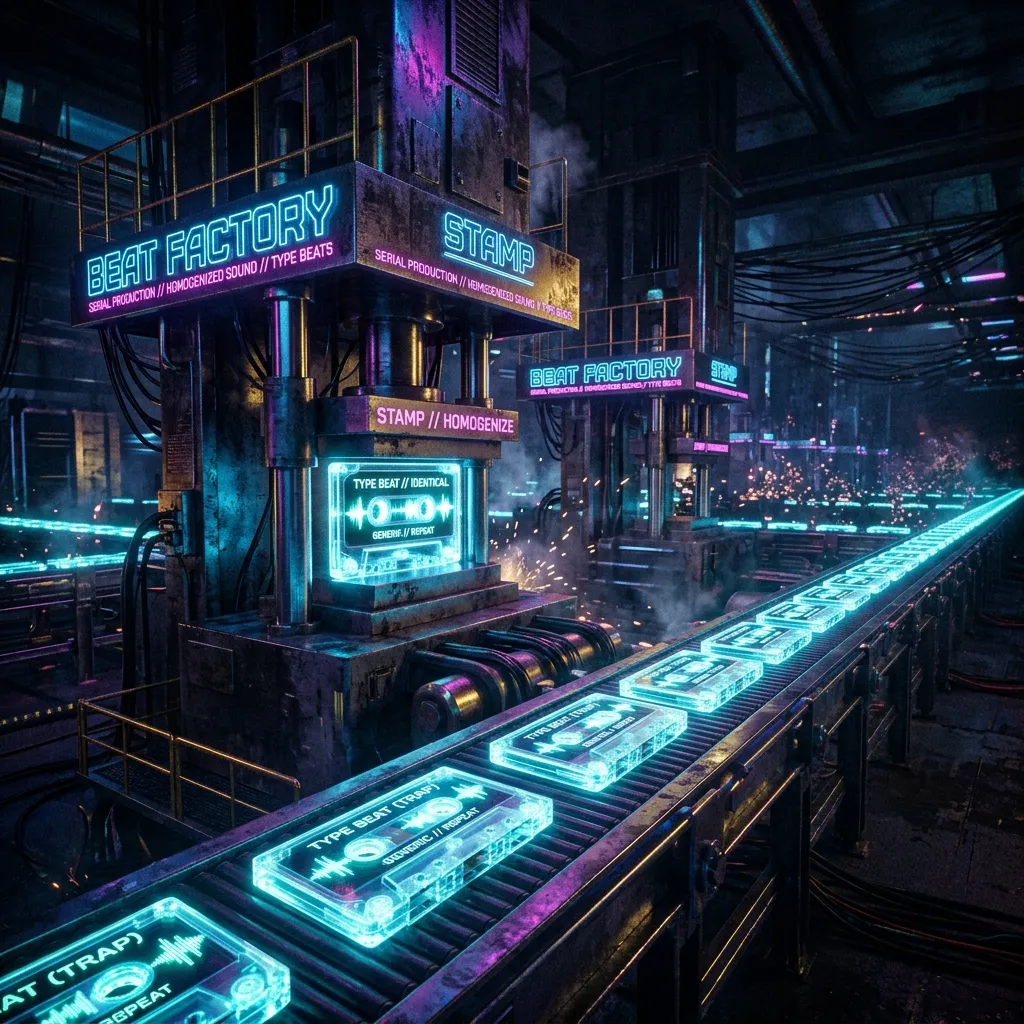
In 2026, however, it has completely mutated into a creative epidemic. As ThugNews' Senior Cultural Critic, I spend dozens of hours every week analyzing the shifting sonic landscape of modern hip-hop. What I am hearing across the underground is a terrifying, overwhelming homogenization of sound. The massive oversaturation of the "Type Beat" economy is actively destroying originality in hip-hop production, and we need to have a serious conversation about why the algorithm is largely to blame.
The Economics of Imitation
To fully understand why almost every modern underground beat sounds exactly the same, you must look closely at the financial incentives driving the modern bedroom producer.
The SEO Trap
Modern independent producers are largely not making music to express a unique, deeply felt artistic vision; they are making music to satisfy a very specific search query.
If a 19-year-old prodigy producer in Chicago spends two grueling weeks crafting a highly experimental, avant-garde instrumental using chopped obscure jazz samples and weird, unquantized drum pockets, nobody will ever hear it. There is absolutely no organic YouTube search volume for "Avant-Garde Jazz Unquantized Rap Beat." The algorithm will bury it instantly.
However, if that exact same producer spends 45 minutes lazily throwing a basic, pre-programmed 808 MIDI pattern under a dark, minor-key piano loop purchased from Splice, and titles it "Lil Baby x Gunna Type Beat," the YouTube algorithm will rapidly serve it to tens of thousands of aspiring rappers. The producer might lease that generic beat thirty times in a single week for $30 each.
The global digital market has spoken loudly and clearly: imitation is highly profitable, and originality is financially punished.
The Homogenization of Sound
When the primary financial incentive of an entire industry is strictly tied to imitation, the entire genre inevitably suffers. This cultural stagnation manifests in two highly destructive ways:
1. The Death of the "Signature Sound"
Think deeply about the golden eras of hip-hop production. You could hear an instrumental for two seconds on the radio and instantly, unmistakably know exactly who made it. The heavy, swinging MPC drum breaks of DJ Premier. The chopped-up, high-pitched chipmunk soul samples of early Kanye West and Just Blaze. The futuristic, bouncing, skeletal synths of The Neptunes. The dark, booming, cinematic trap of Metro Boomin.These legendary producers spent years agonizing in studios to develop a signature sonic identity. Today, producers are actively, financially discouraged from having any identity whatsoever. Their entire business model relies on them being highly efficient sonic chameleons—sounding exactly like Metro Boomin on Monday, exactly like Pi'erre Bourne on Tuesday, and exactly like F1lthy on Wednesday. When everyone is desperately trying to sound like someone else, nobody sounds like themselves.
2. The Algorithmic Feedback Loop
The "Type Beat" economy creates a vicious, endlessly stagnant feedback loop that prevents the genre from evolving naturally. 1. A major artist (e.g., Yeat) drops a massive hit song with a slightly unique sound. 2. Thousands of YouTube producers immediately flood the market with "Yeat Type Beats," meticulously copying the specific synth presets, tempo, and 808 glides. 3. Thousands of upcoming, unsigned rappers download these specific beats and record songs trying to sound exactly like Yeat. 4. The Spotify algorithm recognizes the sonic similarity and blindly groups all these clones into the same algorithmic playlists (like "RapCaviar" or "Get Turnt").The depressing result is a stagnant genre where a single, specific sub-genre or aesthetic is beaten to absolute death for three years until the listeners are entirely exhausted and tune out.
Counterpoint: The Democratization of Access
While the creative critique of the "Type Beat" economy is entirely valid, any honest analysis must also acknowledge the massive socio-economic benefits the system provides. We cannot simply dismiss it without looking at the barriers to entry it successfully destroyed.
Before the rise of BeatStars and YouTube beat leasing, high-quality hip-hop production was severely gated by geography and wealth. If you were a talented rapper from a low-income neighborhood in Ohio, your only options were to rap over low-quality, ripped instrumental MP3s or spend thousands of dollars you didn't have to rent physical studio time with established producers in New York or Atlanta.
The modern "Type Beat" economy completely shattered those geographic and financial barriers. A teenager in rural Texas can now purchase a professional, mixed, and mastered instrumental from a teenager in Paris for the price of a takeout dinner. It has created a massive, decentralized global middle class of producers who can literally pay their rent and support their families strictly off $30 MP3 leases.
The Financial Shift: Studio Leasing vs. BeatStars
| Production Model | Average Cost | Rights Acquired | Geographic Barrier | Speed of Delivery |
| :--- | :--- | :--- | :--- | :--- |
| Traditional Studio Production (Pre-2015) | $500 - $5,000+ per track | Full Exclusive Rights | High (Must travel to major cities) | Slow (Weeks/Months) |
| BeatStars MP3 Lease (2026) | $25 - $50 per track | Limited Streams (e.g., 100k cap) | Zero (Global Digital Access) | Instant Download |
| BeatStars Exclusive Trackout (2026) | $200 - $1,000+ per track | Full Exclusive Rights / Stems | Zero (Global Digital Access) | Instant Download |
While the quality of the art may have suffered through homogenization, the accessibility of the art has never been greater. It is a complex double-edged sword.
The Quality Control Crisis
Beyond just the lack of originality, the sheer, crushing volume of "Type Beats" required to maintain an algorithmically favored YouTube channel has led to a massive drop in basic audio quality and musicality.
Because the primary goal is sheer volume—uploading three beats a day, every single day, to beat the YouTube algorithm—producers now rely incredibly heavily on pre-made, drag-and-drop MIDI chord packs and heavily recycled drum loops. We have reached a deeply cynical point where the producer is no longer actively "producing" anything; they are simply arranging pre-fabricated audio Lego bricks purchased from subscription services like Splice.
The sacred art of digging through dusty crates for obscure vinyl samples, the agonizing, highly technical process of EQing a kick drum to punch perfectly through a dense mix, the fundamental understanding of music theory—these crucial skills are being rapidly lost in favor of upload speed and SEO optimization.
How Do We Fix It?
The ultimate solution is not to ban type beats or elitistically tell young producers to stop hustling to pay their bills. The solution lies entirely with the recording artists.
If you are an aspiring rapper reading this, you must stop leasing the exact same "Drake Type Beat" that 400 other rappers have already recorded over. You are actively ensuring your own failure because you will sound exactly like everyone else in the massive Spotify submission pile. A label A&R cannot distinguish you from the thousands of other clones.
Find a producer whose name you do not recognize. Find someone making weird, uncomfortable beats that don't fit into a clean, searchable SEO category. Build a genuine collaborative relationship with them from the ground up, just like Drake did with 40, or Playboi Carti did with Pi'erre Bourne. You absolutely cannot achieve an original sound by rapping over a mass-produced imitation instrumental.
---