The End of the Traditional 360 Deal
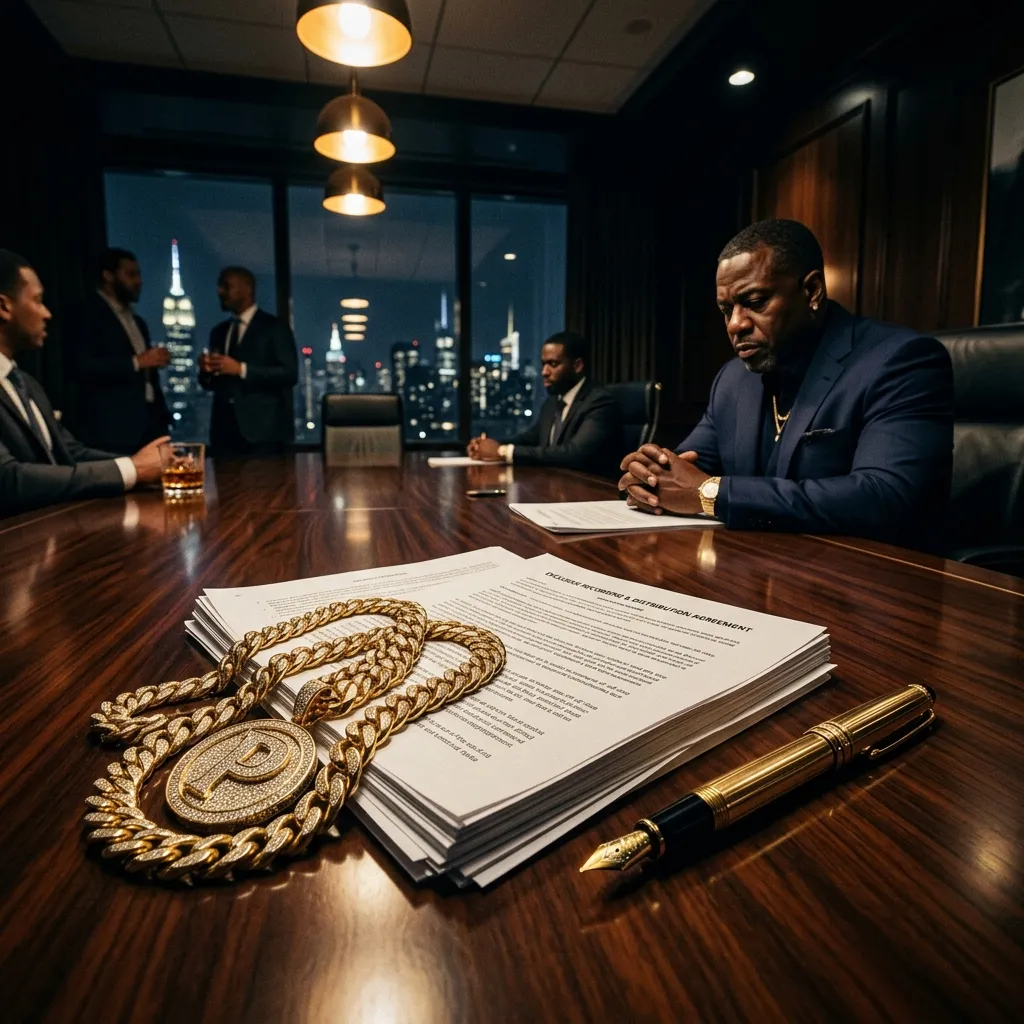
When our editorial team sat down with a prominent entertainment attorney in Atlanta late last year, the conversation kept circling back to one phrase: "leverage." Five years ago, a viral artist with a million TikTok followers would sprint to sign a 360 deal for a $2 million advance, effectively signing away their touring, merchandise, and publishing rights in the process. Today, that same artist walks into the Universal Music Group boardroom with their own distribution sorted, their own fan data captured, and asks for a joint venture.
The traditional record deal as we know it is dying. In 2026, the hip-hop industry is undergoing a massive structural shift. We are witnessing the rise of licensing partnerships over ownership deals, the aggressive acquisition of independent music-tech companies by major labels, and massive corporate mergers that are reshaping the balance of global power.
If you are an independent artist looking for a deal, or simply a fan trying to understand the business behind the music, understanding these moves is crucial. This comprehensive guide breaks down the biggest record deals, acquisitions, and strategic partnerships that have defined the hip-hop industry in 2026.
Why Artists Are Rejecting Standard Contracts
The power dynamic between artists and record labels has fundamentally shifted due to the democratization of music distribution. A traditional record deal involves a label providing financial advances, marketing, and distribution in exchange for ownership of the artist's master recordings. In the past, this was the only way to get CDs into physical retail stores. Today, an artist can upload a track to Spotify via DistroKid for $20.
Because distribution is no longer a monopoly, labels must offer entirely different value propositions to attract top-tier hip-hop talent.
The Shift in Deal Structures
To understand what artists are signing in 2026, we must look at the evolution of industry contracts:
| Deal Type | Ownership of Masters | Label's Role | Artist's Profit Split | 2026 Popularity |
| :--- | :--- | :--- | :--- | :--- |
| Traditional Record Deal | Label owns 100% | Funds recording, marketing, distribution | 15% - 20% | Declining rapidly |
| 360 Deal | Label owns 100% | Funds everything, takes a cut of touring & merch | 15% - 20% | Highly unpopular |
| Licensing Deal | Artist retains ownership | Leases the masters for a set period (e.g., 5-10 years) | 50% - 70% | Highly popular |
| Distribution / Services Deal | Artist owns 100% | Provides playlist pitching, global marketing reach | 80% - 85% | The new standard |
In 2026, top-tier independent hip-hop artists are overwhelmingly choosing Distribution and Licensing Deals, leveraging their existing audience to retain ownership of their masters while utilizing major label infrastructure for global scaling.
Step 1: The Massive Corporate Consolidations of 2026
The biggest money moving in hip-hop this year is not between labels and artists; it is between corporations. As streaming revenue stabilizes, major entities are buying up competitors to increase their market share.
The BMG and Concord Mega-Merger
The most significant industry tremor of 2026 was the monumental merger between BMG and Concord. Valued at approximately $7 billion, this acquisition essentially created the industry's "fourth major" music company, placing it directly behind the massive triad of Universal Music Group (UMG), Sony Music Entertainment, and Warner Music Group. This is critical for hip-hop because both BMG and Concord control massive publishing catalogs of classic hip-hop and R&B. By consolidating this power, they now have unparalleled leverage when negotiating licensing rates with streaming platforms like Spotify and TikTok, directly affecting how much money trickles down to the songwriters and producers.Warner Music Group Acquires Sureel AI
The intersection of artificial intelligence and hip-hop production reached a boiling point in 2026. Warner Music Group made headlines by acquiring Sureel AI, a cutting-edge music-tech startup. Sureel AI utilizes "AI DNA" technology to track, identify, and license copyrighted music used in generative AI models. As producers increasingly use AI to generate samples and vocals, major labels are scrambling to ensure their artists are compensated. Warner’s acquisition proves that the future of record deals will heavily involve strict contractual language regarding AI likeness rights and algorithmic generation.Step 2: The Rise of the Independent Powerhouses
While the major labels consolidate at the top, the cultural capital of hip-hop is being controlled by independent, artist-led collectives. These labels function as incubators, providing regional artists with authentic branding before partnering with a major for distribution.
The Dominance of CMG (Collective Music Group)
Yo Gotti’s CMG has solidified itself as the most dominant street-rap label of the decade. Following the massive success of artists like Moneybagg Yo, EST Gee, and GloRilla, CMG's strategy in 2026 relies on hyper-regional dominance. They sign artists who already have the streets of Memphis, Detroit, or Louisville locked down, and then amplify that local heat through CMG's massive network of established acts. Their 2026 joint-venture distribution renewals with Interscope represent some of the most lucrative partnerships in the industry.Top Dawg Entertainment (TDE) Evolves
Following Kendrick Lamar’s high-profile departure to start his own company (pgLang), many questioned the future of TDE. However, in 2026, TDE proved its resilience by focusing heavily on R&B and melodic hip-hop, securing highly favorable distribution terms for artists like Doechii and SZA. TDE remains the blueprint for the "slow-burn" artist development model, refusing to rush releases to satisfy algorithmic demands.The AWAL Licensing Model
A defining trend of late 2025 and 2026 has been international and hybrid artists rejecting traditional major label structures altogether. A prime example was the massive move by Afrobeats star CKay to AWAL (Artists Without A Label). AWAL operates primarily on licensing and distribution deals. This allowed CKay to leverage AWAL’s global marketing muscle while retaining the rights to his incredibly lucrative master recordings—a move that dozens of emerging American hip-hop artists have successfully replicated this year.Step 3: Navigating the 2026 Deal Landscape
If you are an independent artist, the path to getting signed has drastically changed. The days of handing a mixtape to an A&R outside a club are entirely over.
The Reality of Digital Submissions
According to industry reports from 2026, roughly 34% of new signings at major labels originate from digital submissions and data scraping. A&Rs use sophisticated software to track TikTok engagement, Spotify pre-saves, and YouTube growth velocities. However, "cold" submissions (emailing a link to a label) have a success rate of less than 0.02%. The artists who successfully navigate the digital submission process are those who already possess localized momentum that the label's algorithms can detect.The "TikTok Clause"
In 2026, almost every major label contract includes specific deliverables regarding short-form video content. Labels are no longer just paying for audio recordings; they are paying for your personality. Contracts frequently mandate that an artist must post a minimum number of TikToks or Instagram Reels per week to receive their marketing budgets. If you are an artist who refuses to engage with social media, your value on the open market drops significantly.Best Practices for Securing a Favorable Deal
Getting a deal is easy; getting a good deal requires extreme leverage and patience.
Build Local Infrastructure First
Industry guidance in 2026 consistently emphasizes regional dominance over shallow national exposure. Labels are actively looking for artists who have built a verifiable following in key hubs like Atlanta, Chicago, or London. If you can sell out a 300-capacity venue in your hometown independently, you have actual leverage to negotiate your royalty splits.Hire an Entertainment Attorney Early
Never sign a piece of paper provided by a label without a dedicated entertainment attorney reviewing it. An entertainment attorney specializes in intellectual property, contract negotiation, and royalty structures within the music industry. A manager’s job is to secure the deal; an attorney’s job is to ensure you aren't legally robbed by it.Understand the Recoupment Process
When a label gives you a $1,000,000 advance, it is not a gift; it is a high-interest loan. You will not see another penny of royalties until that advance, plus marketing expenses, video budgets, and tour support, is fully recouped (paid back) from your percentage of the profits. In 2026, smart artists negotiate smaller advances in exchange for higher royalty rates and shorter licensing terms.Common Mistakes Artists Make in Negotiations
The hip-hop industry is littered with cautionary tales of brilliant artists who signed terrible paperwork. Avoid these critical errors when evaluating a potential deal.
Mistake 1: Giving Up Publishing for Advance Money
Publishing—the rights to the underlying musical composition (the lyrics and the melody)—is where the long-term wealth in the music industry resides. Many artists, desperate for a large upfront check, sign away their publishing rights in perpetuity. The Fix: Never bundle your publishing with your recording contract. Keep them separate. If you need money, negotiate a temporary publishing administration deal where a company collects royalties on your behalf for a small fee (usually 10-15%) but you retain full ownership of the copyright.Mistake 2: Ignoring the "Commitment" Clause
Many new artists sign deals thinking they are guaranteed to release three albums. In reality, contracts usually obligate the artist to deliver three albums, but give the label the "option" to accept or reject them. The Fix: You must negotiate strict "release commitments." If you deliver a completed, commercially viable album, the label must release it within a specific timeframe (e.g., 120 days). If they refuse, the contract must include a clause allowing you to walk away from the deal and take the unreleased music with you.Mistake 3: Focusing Only on the Advance
An artist will proudly announce they signed a $2 million deal, not realizing that $1.5 million of that is earmarked for recording costs and marketing, leaving them with very little actual liquid capital, but still putting them $2 million in debt to the label. The Fix: Focus your negotiations on the royalty rate (aim for a 50/50 net profit split in a joint venture) and the reversion of your masters (ensuring your masters return to your ownership after 5-7 years).Frequently Asked Questions (FAQ)
What is a Joint Venture (JV) deal?
A Joint Venture (JV) deal is a partnership between an independent artist (or their independent label) and a major label. Instead of the major label owning the artist, the two entities share the costs, the risks, and the profits (usually split 50/50). The major label provides the global distribution and radio promotion infrastructure, while the independent label provides the creative direction and the artist.Why do artists still sign with major labels in 2026 if they can distribute independently?
While independent distribution is incredibly accessible, breaking a global pop-crossover hit still requires massive capital. Major labels control the relationships with top-tier radio programmers, elite playlist curators, and global marketing agencies. If an artist wants to transition from playing theaters to headlining stadium tours globally, major label infrastructure is usually required.What are "Master Recordings"?
A "Master Recording" is the final, original audio recording of a specific song. Whoever owns the master recording owns the right to control how that specific version of the song is distributed, streamed, sold, and licensed to movies or commercials. Owning your masters is the ultimate goal for any artist focused on long-term wealth.How does the BMG/Concord merger affect independent hip-hop artists?
The merger primarily affects the publishing side of the industry. Because this massive new entity controls a huge share of the market, they will likely negotiate higher payout rates from streaming services. Independent artists whose publishing is administered by BMG or Concord may see an increase in their mechanical and performance royalties as a result of this newfound corporate leverage.Is the 360 deal officially dead?
It is not completely dead, but it is highly stigmatized. Labels still attempt to push 360 deals (where they take a percentage of touring, merch, and endorsements) onto completely unproven artists who have no leverage. However, any artist with a competent management team and a pre-existing fanbase in 2026 will aggressively negotiate these clauses out of their contract.Protect Your Art
The hip-hop industry in 2026 is a sophisticated, data-driven corporate machine. It is entirely possible to generate generational wealth within this system, but only if you treat your artistry as a business from day one. Build your local leverage, understand the difference between ownership and distribution, and never prioritize a quick advance over long-term equity.
If you are an independent producer looking to secure your first major placement, you need to ensure your audio quality is industry-standard. Learn how the top professionals craft radio-ready instrumentals in our definitive guide to Beat-Making in 2026.