The Death of the "Upload and Hope" Era
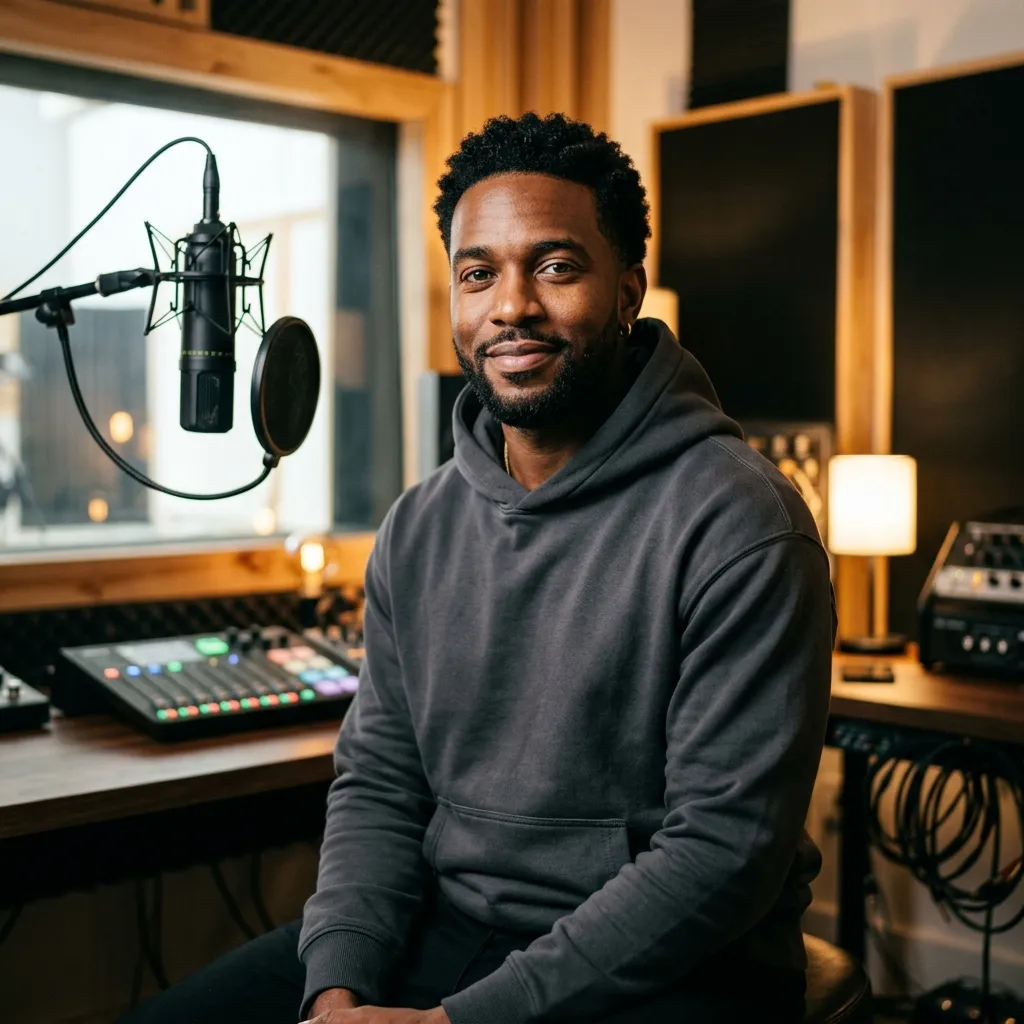
When I sat in on a studio session with an emerging Atlanta producer last winter, he didn't pull up a mixing plugin to check his master track; he pulled up TikTok. He recorded a 15-second snippet of an unfinished beat, uploaded it with a trending hashtag, and waited. "If this doesn't get 10,000 views by tomorrow morning," he told me, "I'm deleting the project file." He wasn't making music for the radio; he was A/B testing audio data in real-time.
In 2026, the hip-hop music industry has completed its transition from a physical distribution model to a deeply integrated, data-driven ecosystem. The days of simply uploading a brilliant track to SoundCloud and hoping an A&R discovers it are entirely over. Today, streaming platforms and short-form video algorithms are the judge, jury, and executioners of a rap career.
If you want to understand why hip-hop sounds the way it does today, you must understand the infrastructure delivering it to your ears. This comprehensive guide breaks down exactly how streaming changed the culture, the metrics that actually matter in 2026, and how artists are surviving in an algorithmic world.
Why the Algorithm is the New A&R
For decades, Artists and Repertoire (A&R) executives at major record labels acted as the gatekeepers of hip-hop. They decided who got studio time, who got radio play, and ultimately, who got famous. Today, those human gatekeepers have been largely replaced by lines of code.
An algorithm is a set of rules used by streaming platforms to determine which songs are recommended to users based on their listening history and engagement behavior.
The algorithm does not care about an artist's background, their street credibility, or how much a label spent on their music video. The algorithm only cares about "signals"—data points indicating that a user is highly engaged with a piece of content.
The Evolution of Music Discovery
To truly grasp the current landscape, let's compare how hip-hop discovery has shifted from the golden era to the modern 2026 reality:
| Discovery Metric | The Physical Era (1990s) | The Early Streaming Era (2015) | The Algorithmic Era (2026) |
| :--- | :--- | :--- | :--- |
| Primary Gatekeeper | Radio DJs and MTV programmers | Spotify/Apple Music Editorial Curators | Machine Learning Algorithms |
| Marker of Success | First-week CD sales (Billboard 200) | Total overall stream counts | "Sticky" Engagement (Saves/Replays) |
| Promotional Vehicle | Multi-million dollar music videos | Features on massive playlists (RapCaviar) | TikTok / Short-form viral trends |
| Song Structure | 4-minute tracks with long intros | 3-minute tracks with immediate hooks | 2-minute tracks designed for looping |
| Artist Strategy | Release an album every 2 years | Release a single every month | Release multiple snippets a week |
In 2026, total stream counts are essentially vanity metrics. The platforms prioritize "Signal-First" engagement—rewarding artists who drive external traffic and maintain high retention rates over those who just buy their way onto massive playlists.
Step 1: Understanding the 2026 Streaming Metrics
If you are an independent artist trying to break the algorithm, or a fan trying to support your favorite underground rapper, you must understand the metrics that trigger growth on platforms like Spotify and Apple Music.
1. The Power of "Saves" and "Library Adds"
Streaming platforms view passive listening as low-value data. If a user listens to a song while a playlist runs in the background, the algorithm barely registers it. However, if a user physically clicks the "Save" or "Add to Library" button, the algorithm registers a massive vote of confidence. It tells the machine, "This user intends to return to this song." A track with 10,000 streams and 5,000 saves will be pushed to the Discover Weekly algorithm far faster than a track with 100,000 streams and only 100 saves.2. Completion Rates and the "Skip" Penalty
The algorithm brutally punishes songs that fail to hold attention. If a user skips a track within the first 30 seconds, it severely damages the song's "Completion Rate." This is exactly why the architecture of a modern hip-hop song has changed. Long, atmospheric intros are dead. Modern tracks drop the listener immediately into the hook or the most energetic part of the beat to prevent that initial skip.3. External Traffic Injection
Spotify and Apple Music want more users on their apps. In 2026, algorithms heavily favor artists who can prove they are bringing traffic into the platform from the outside. If a rapper posts a TikTok that directs 5,000 people to click a Spotify link in their bio, Spotify's algorithm rewards that external injection by artificially boosting the track within its own internal recommendation ecosystem.Step 2: TikTok as the Real-Time A&R Tool
It is impossible to discuss modern hip-hop streaming without discussing TikTok. The platform has evolved from a simple promotional tool into the core testing ground for the entire music industry.
Upstream Testing and the "Snippet" Strategy
Artists no longer wait to finish a song to see if it is a hit. The modern strategy involves recording a rough 15-second hook, syncing it to a visually engaging or humorous video, and posting it as a "snippet." If the snippet fails to generate UGC (User-Generated Content—meaning other people using that audio for their own videos), the artist abandons the song. If it goes viral, the artist immediately rushes to finish mixing the track and drops it on streaming platforms to capitalize on the momentum.Context Over Content
In the early days of TikTok, random dances drove hip-hop virality. In 2026, the market is too saturated for that. Success now relies on "contextual virality." Artists must provide a narrative. Whether it's a vlog showing the chaotic process of making the beat, or a highly specific, memeable lyric that users can apply to their daily lives, the music must serve as a soundtrack to a larger cultural conversation.Step 3: The Economic Reality of the 2026 Model
While streaming has democratized distribution, allowing a kid in a bedroom to reach millions of listeners without a label, the financial realities remain grim.
The Pro-Rata System Flaw
Most major streaming platforms operate on a "pro-rata" model. This means that all the subscription money collected from users goes into one massive pool. The money is then divided up based on overall market share. If Drake accounts for 5% of all streams on the platform that month, he gets 5% of the total revenue pool—even if a specific user never listened to a single Drake song. This model heavily favors massive pop and mainstream hip-hop artists while financially starving independent, niche creators.The Shift to Direct-to-Fan Monetization
Because streaming payouts are notoriously low (often fractions of a penny per stream), intelligent hip-hop artists in 2026 use streaming purely as a marketing funnel. They do not expect to get rich from Spotify. Instead, they use algorithmic growth to build a localized fanbase, and then aggressively monetize that fanbase through direct-to-consumer avenues: selling high-margin merchandise, exclusive vinyl pressings via Bandcamp, or offering subscription access to unreleased music on Patreon.Best Practices for Navigating the Streaming Era
If you are trying to build a career in the modern hip-hop landscape, ignoring the data is career suicide. Follow these core practices to manipulate the algorithm in your favor.
Release Consistently, Not Massively
The algorithm rewards consistency. Dropping a 20-song album and then disappearing for a year is the worst possible strategy in 2026. The algorithm favors artists who feed it constantly. The ideal strategy is the "Waterfall Method": releasing one single every three weeks. This consistently triggers the algorithmic Release Radar playlists and keeps your monthly listener metrics artificially stabilized.Build the "Pre-Save" Campaign
Before you release a track on a Friday, you must spend the two weeks prior running a pre-save campaign. A pre-save allows a user to "save" the song to their library before it officially releases. If you can generate 1,000 pre-saves, the algorithm sees a massive spike in engagement the exact second the song goes live, instantly flagging it for algorithmic playlist inclusion.Optimize Your Canvas and Metadata
Spotify allows artists to upload a "Canvas"—a 3-to-8-second looping video that plays while the song streams on mobile. Data from 2026 shows that tracks with a high-quality Canvas experience a 20% increase in playlist adds and a significant drop in skip rates because the user has something visual to engage with. Furthermore, ensure your metadata (tags, mood, genre classification) is hyper-specific so the algorithm knows exactly which micro-communities to push your song toward.Common Mistakes in the Streaming Game
Many talented artists destroy their algorithmic potential by adhering to outdated industry mindsets. Avoid these critical errors.
Mistake 1: Paying for Playlist Placements
The most common and destructive mistake an independent artist can make is paying a third-party service to guarantee a spot on a massive playlist. The Fix: This is called "botting," and the algorithms are incredibly sophisticated at detecting it. If Spotify detects that your track is receiving thousands of plays from sterile, inactive bot accounts, they will permanently shadow-ban your profile or remove your music entirely. Algorithmic growth must be organic.Mistake 2: Ignoring the Hook
As discussed, the skip rate is the most important metric. If your song features a 45-second cinematic intro with dialogue from a movie before the beat drops, the algorithm will kill it. The Fix: Get to the point. The listener needs to hear the primary melody, the heavy 808, or the main vocal hook within the first 5 to 10 seconds. You can save the long, artistic intros for the live shows; on streaming, you are fighting a microscopic attention span.Mistake 3: Focusing Solely on Major Editorial Playlists
Artists obsess over getting on RapCaviar or Today's Top Hits, believing it will instantly make them a star. The Fix: While editorial playlists provide a massive spike in streams, they rarely provide long-term fans. People listening to those massive playlists are passive consumers; they rarely check the artist's name. Focus on triggering algorithmic playlists (like Discover Weekly), as these are served to users whose data explicitly states they already like your specific subgenre.Frequently Asked Questions (FAQ)
What is a "Waterfall Release" strategy?
A waterfall release strategy is a modern distribution tactic where an artist releases a single, and then a few weeks later, releases a second single, but attaches the first single to it as a two-track EP. When the third single drops, the first two are attached. This "waterfalls" the streams, ensuring that every time a new song drops, the older songs automatically accumulate passive streams from the new listeners.Does the length of a hip-hop song matter in 2026?
Yes, significantly. Because streaming platforms pay out per play (once a user listens past the 30-second mark), artists are financially incentivized to make shorter songs. A user can stream a 2-minute song 15 times in a half hour, generating 15 payouts. They can only stream a 5-minute song 6 times. This is why the average length of a mainstream hip-hop track has dropped drastically over the last five years.How do independent artists get on Spotify algorithmic playlists?
You cannot pitch to an algorithmic playlist; it is entirely controlled by machine learning. The only way to trigger it is by generating high-quality engagement signals: driving traffic from TikTok/Instagram, achieving a high Save-to-Stream ratio, and maintaining a low skip rate. Once the machine sees users are actively engaging with the track, it will automatically test it in algorithmic playlists.Why do some viral TikTok songs fail on streaming?
Not all viral moments translate to audio consumption. If a song goes viral on TikTok purely because of a funny dance or a meme, the audience associates the audio with the joke, not the artist. When they go to Spotify, they listen to the 15-second hook, get bored, and skip the rest of the song, destroying the track's completion rate and algorithmic potential.Is SoundCloud still relevant for hip-hop in 2026?
Yes, but its role has changed. It is no longer the primary platform for mainstream discovery like it was during the 2016 "SoundCloud Rap" era. However, it remains the absolute best platform for underground, experimental artists, DJ mixes, and raw, uncleared sample flips that would be immediately taken down by copyright strikes on Spotify or Apple Music.The Data is the New Canvas
The romanticized image of the hip-hop industry—where sheer talent naturally rises to the top—is a myth in the streaming era. Talent is the prerequisite, but data manipulation is the execution. By understanding how the algorithms function, prioritizing direct-to-fan engagement over vanity metrics, and utilizing platforms like TikTok as real-time A&R testing grounds, modern artists can navigate this digital ecosystem successfully.
You understand the data, but do you understand the business structure behind it? Ensure you know exactly what contracts these streaming numbers lead to by checking out our deep dive into Hip-Hop's Biggest Record Deals in 2026.